



When the Center of New York Nurses (CFNNY) first approached us over a decade ago, they were struggling with a common nonprofit challenge: getting their valuable resources and educational content in front of the nurses and healthcare professionals who needed it most. Their website wasn't effectively reaching their target audience, and their online presence wasn't reflecting the quality and importance of their work.
Fast forward ten years, two strategic website redesigns, and countless SEO optimizations later – CFNNY's digital presence tells a completely different story. Today, we're excited to share how strategic local SEO and thoughtful website redesign helped transform their online reach and impact.
The Challenge: Great Content, Limited Visibility
Like many nonprofits, CFNNY had incredible resources to offer – continuing education opportunities, professional development programs, advocacy updates, and networking events specifically tailored for New York's nursing community. The problem? Their target audience couldn't find them when they needed these services most.
The original website suffered from common SEO pitfalls: generic page titles, missing meta descriptions, poor internal linking structure, and content that wasn't optimized for the specific search terms that nurses and healthcare administrators were actually using. When someone searched for "continuing education for nurses NYC" or "New York nursing advocacy," CFNNY wasn't appearing in the results.
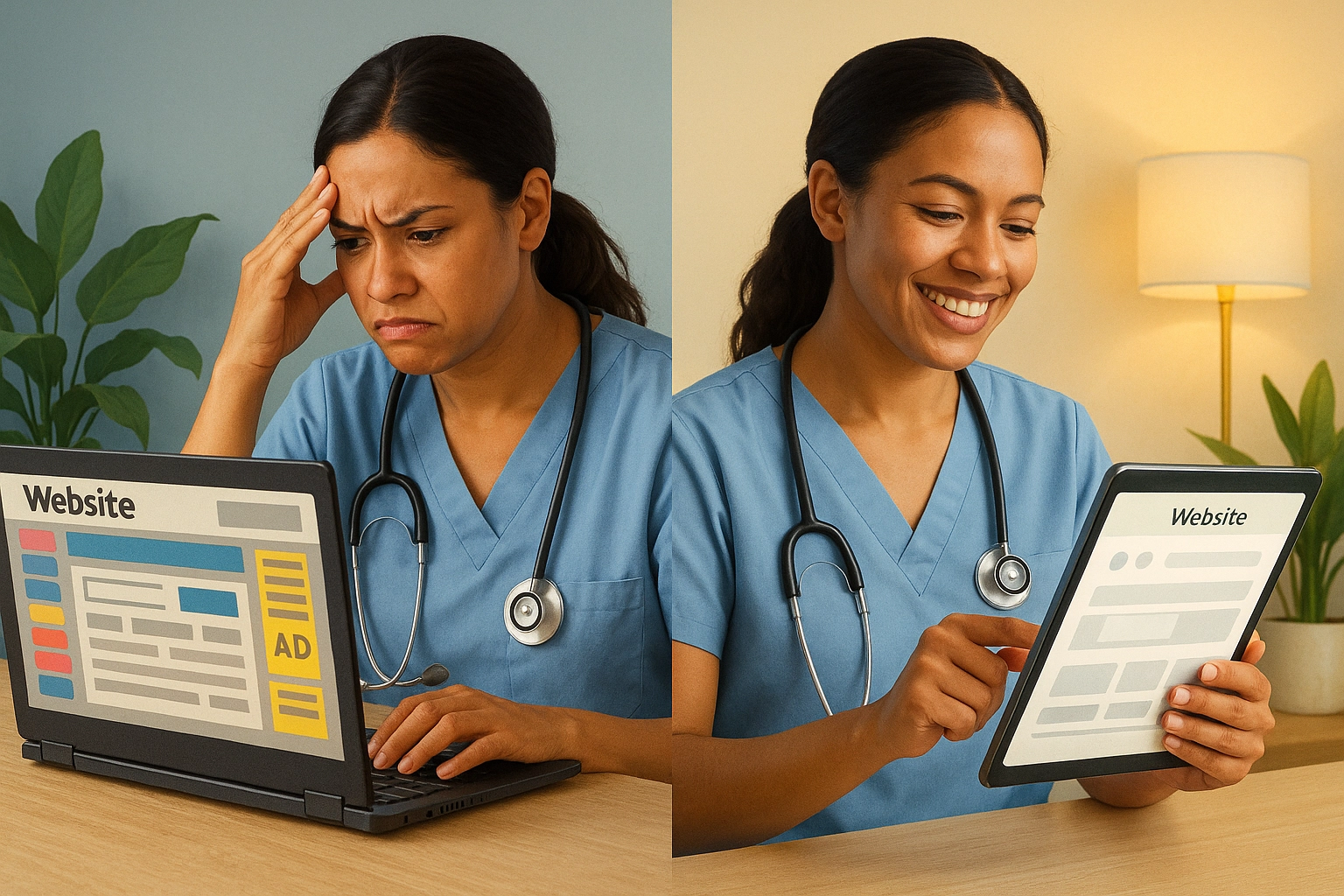
First Redesign: Building the Foundation
Our first redesign focused on creating a solid technical foundation while dramatically improving the user experience. We started with comprehensive keyword research to understand exactly how CFNNY's target audience was searching for their services.
The most impactful change was restructuring their content architecture. Instead of having broad, generic pages, we created specific landing pages for different nurse specialties, continuing education categories, and regional programs. Each page was carefully optimized with relevant title tags, meta descriptions, and header structures that matched search intent.
We also implemented a robust internal linking strategy, connecting related content in a way that both users and search engines could easily navigate. Blog posts about continuing education linked to relevant course pages, advocacy updates connected to membership information, and event announcements tied back to educational resources.
Technical Improvements That Made a Difference
The first redesign included several technical SEO improvements that had immediate impact:
- Page load speed optimization reduced bounce rates significantly
- Mobile-responsive design ensured nurses could access information on any device
- Schema markup implementation helped search engines better understand CFNNY's content
- XML sitemap creation made it easier for Google to discover and index new content
Results After the First Redesign
After allowing time for Google to reindex the new site structure, the results were encouraging. Organic search traffic increased by approximately 65% within six months, with particularly strong growth in searches related to continuing education and professional development programs.
More importantly, the quality of traffic improved dramatically. Instead of attracting generic healthcare job seekers, the site began drawing registered nurses, nurse practitioners, and healthcare administrators – exactly the audience CFNNY wanted to serve. Time on site increased by nearly 40%, and the bounce rate dropped from 78% to 52%.

Event registrations saw a notable uptick, with online sign-ups increasing by 45% compared to the previous year. The improved search visibility meant more nurses were discovering CFNNY's educational offerings when they actively searched for professional development opportunities.
Second Redesign: Refining and Expanding
Five years later, we embarked on a second redesign to address evolving user expectations and search engine algorithms. This time, we had the benefit of years of analytics data showing us exactly how visitors were using the site and what content performed best.
The second redesign focused heavily on content expansion and local SEO optimization. We created comprehensive resource hubs for different nursing specialties, developed location-specific pages for various New York regions, and built out extensive FAQ sections based on the most common inquiries CFNNY received.
Advanced Local SEO Strategies
For the second redesign, we implemented more sophisticated local SEO tactics:
- Location-specific landing pages for different NYC boroughs and upstate regions
- Google Business Profile optimization with regular updates about events and programs
- Local citation building across healthcare directories and professional associations
- Community partnership content highlighting CFNNY's collaborations with local hospitals and healthcare systems
We also expanded the blog significantly, publishing regular content about nursing trends, regulatory updates, and professional development tips. Each post was optimized for specific keyword clusters while providing genuine value to CFNNY's audience.
Impressive Results After the Second Redesign
The second redesign's impact was even more dramatic than the first. Within eight months of launch, organic search traffic had increased by an additional 85% compared to pre-redesign levels. Even more impressive was the expansion in keyword rankings – CFNNY began ranking on page one for over 150 relevant search terms, compared to just 23 before the redesign.

Local search visibility improved substantially, with CFNNY appearing in the top three results for searches like "nursing education NYC," "RN continuing education New York," and "nursing advocacy organizations." This local visibility boost was particularly valuable since many of CFNNY's programs and events were location-specific.
The enhanced content strategy paid dividends in engagement metrics. Average session duration increased to over four minutes, and pages per session grew from 1.8 to 3.2. Perhaps most importantly for a nonprofit, email newsletter signups increased by 120%, expanding CFNNY's ability to communicate directly with their audience.
Key Strategies That Drove Success
Looking back at both redesigns, several strategic decisions proved particularly effective for CFNNY's success:
User-Centric Content Organization: Instead of organizing content by internal departments, we structured everything around user needs and search behavior. Nurses looking for continuing education could find relevant courses immediately, while those seeking advocacy information had a clear path to policy updates and action items.
Comprehensive Keyword Coverage: We didn't just target high-volume keywords. Instead, we built content around the entire search ecosystem, including long-tail phrases and question-based queries that reflected how nurses actually searched for information.
Regular Content Updates: Consistent blog publishing and resource updates signaled to search engines that CFNNY was an active, authoritative source in their field. This ongoing content strategy helped maintain and improve rankings over time.
Technical Excellence: Both redesigns prioritized technical SEO fundamentals – fast loading times, clean code, proper redirects, and mobile optimization. These behind-the-scenes improvements provided the foundation for content-based SEO success.

Lessons for Other Nonprofits
CFNNY's success offers valuable insights for other nonprofits looking to improve their online visibility:
Patience Pays Off: SEO results don't happen overnight. Both of CFNNY's redesigns required 3-4 months for full indexing and another 2-3 months to see significant traffic improvements. Nonprofits need to plan for this timeline and resist the urge to make premature changes.
Quality Over Quantity: Rather than creating lots of thin content, focus on developing comprehensive, valuable resources that truly serve your audience. CFNNY's detailed continuing education guides and regulatory update summaries performed much better than shorter, less informative posts.
Local Relevance Matters: Even if your nonprofit serves a broad mission, local optimization can significantly improve visibility. CFNNY's regional pages and location-specific event listings drove substantial targeted traffic.
Mobile Experience Is Critical: Healthcare professionals often search for information during breaks or between shifts. CFNNY's mobile-optimized design ensured they could easily access needed information regardless of device or location.
Ready to Transform Your Nonprofit's Online Presence?
The Center of New York Nurses' journey demonstrates how strategic local SEO and thoughtful website design can dramatically improve a nonprofit's ability to serve its community. Through two carefully planned redesigns and ongoing optimization efforts, CFNNY transformed from having limited online visibility to becoming a go-to digital resource for New York's nursing community.
If your nonprofit is struggling to reach its target audience online, or if your current website isn't generating the engagement and conversions you need to fulfill your mission, we'd love to help. At Mindful Coding Solutions, we specialize in creating digital solutions that help organizations make a bigger impact.
Whether you're looking for a complete website overhaul or targeted SEO improvements, our team understands the unique challenges nonprofits face in the digital landscape. We'll work with you to develop a strategy that not only improves your search rankings but also better serves your community's needs.
Learn more about our Local SEO services to discuss how we can help your nonprofit achieve similar results and expand your positive impact through strategic digital marketing.