




Most businesses do not have an online presence problem. They have a consistency problem.
Their website says one thing, their Google Business Profile says another, social media is half-active, reviews sit unanswered, and paid traffic lands on pages that were never built to convert. If you are wondering how to improve online presence, the answer is rarely a single tactic. It is usually better alignment between visibility, credibility, and conversion.
That matters whether you run a law firm, medical practice, roofing company, plumbing business, or local service brand. People are deciding fast. They search, compare, scan reviews, visit your website, and make a judgment in minutes. A stronger online presence helps you get found, but more importantly, it helps you look like the obvious choice.
What online presence actually means
Online presence is not just your website or your social accounts. It is the full digital footprint people see when they look you up. That includes your search rankings, local listings, reviews, social content, ad visibility, business information, brand consistency, and the overall experience someone has from first search to first contact.
A business can be active online and still be weak where it counts. You might post regularly on Instagram but have poor local SEO. You might rank well in search but send visitors to a slow, outdated site. You might generate leads through ads but lose them because your follow-up system is patchy. This is why improving online presence is part marketing and part infrastructure.
How to improve online presence by fixing the foundation
Before you invest more in content, ads, or social media, make sure your core digital assets are doing their job.
Start with your website. It should load quickly, work well on mobile, and make your next step obvious. For some businesses, that means calls. For others, it means form submissions, appointment requests, or quote requests. A beautiful site that does not convert is expensive decoration.
Clarity matters as much as design. Your homepage should explain what you do, who you serve, and why someone should trust you. Your service pages should be specific, not generic. If you work in multiple locations, those locations should be represented clearly. If your audience needs reassurance, show reviews, certifications, results, or examples of completed work.
Technical performance matters too. Broken forms, indexing issues, duplicate pages, and poor site structure quietly undermine visibility. This is where many businesses hit a ceiling. They are doing the visible marketing work, but the technical side is holding them back.
Own your local search visibility
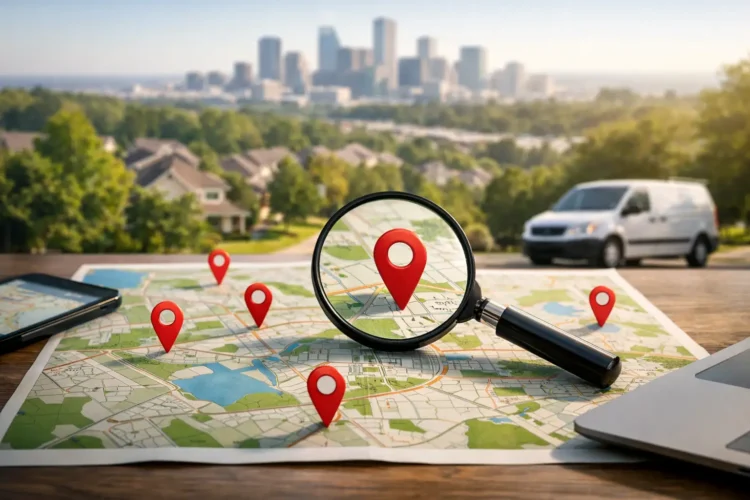
For local and regional businesses, Google Business Profile is one of the fastest ways to strengthen visibility. Yet many companies leave it incomplete or outdated.
Your name, address, phone number, hours, categories, and service areas should be accurate everywhere they appear online. Photos should look current and professional. Reviews should be answered consistently. Posts and updates can help, but the basics come first.
Local listing consistency also matters across directories. If your contact information changes from one platform to another, search engines and customers both lose confidence. That sounds minor, but it directly affects trust and local discoverability.
If you serve a competitive market like roofing, legal, dental, or home services, local SEO is often the difference between getting the call and being ignored. Strong local presence is not built through tricks. It comes from accurate business data, quality reviews, relevant service content, and a technically sound site.
Content should answer buying questions, not just fill space
A lot of content gets published because someone knows they should be creating it. That is not enough.
If you want to know how to improve online presence in a way that supports revenue, create content around the questions people ask before they hire you. A personal injury law firm might address what to do after an accident. A plumber might explain signs of a slab leak. A mental health practice might clarify what to expect in the first session. Good content lowers hesitation.
This is where strategy matters. Some content should target search demand. Some should support sales conversations. Some should build credibility with reviews, case examples, or educational updates. Not every page needs to rank nationally. It needs to help the right audience move forward.
There is also a trade-off here. High-volume topics can bring traffic, but traffic without intent does not always become leads. Lower-volume, high-intent content often performs better for service businesses because it attracts people closer to making a decision.
Social media helps, but only when it supports the business
Many owners feel pressure to be everywhere. Usually, that is not necessary.
Your social presence should match your audience and your capacity. If your customers use Facebook and Google reviews to evaluate local providers, that may matter more than trying to build a daily presence on every platform. If you are in a visual industry like real estate, construction, or cosmetic services, Instagram may play a bigger role. If you sell business-to-business services, LinkedIn may deserve more attention.
What matters most is consistency and relevance. Post completed work, behind-the-scenes updates, team credibility, helpful advice, customer wins, and reminders of what makes your process easier or better. Social media should reinforce trust, not distract from your core message.
It is also worth being honest about what social can and cannot do. For many service businesses, social media supports credibility more than direct lead generation. That is still valuable. Prospects often check social channels after finding you elsewhere.
Reviews are part of your marketing system
Reviews influence rankings, click-through rates, and conversion. More importantly, they reduce risk in the mind of the buyer.
If you provide a strong service but rarely ask for reviews, you are leaving trust on the table. Build a process for requesting reviews at the right time, after a successful project, completed appointment, or positive service interaction. Make it easy. Then respond professionally to what comes in, including the occasional negative review.
The goal is not a perfect five-star image with no texture. The goal is a real pattern of good outcomes, recent activity, and visible responsiveness. A business with 60 strong reviews and thoughtful replies will usually outperform one with 8 old reviews and silence.
Paid traffic works best when the rest of the system is ready
Some businesses try to fix weak online presence by buying attention. Sometimes that works for short-term lead volume. Often it just makes underlying problems more expensive.
If your ads are sending users to weak landing pages, if your forms are clunky, or if your follow-up is slow, paid campaigns can underperform even with a healthy budget. This is why execution matters across the full funnel.
A stronger approach is to use paid traffic to amplify what is already working. If a service page converts well, support it with search ads. If a retargeting audience responds to testimonial content, build around that. If abandoned leads need a second touch, use email or automation to re-engage them. When marketing and technical systems work together, your online presence becomes more than visibility. It becomes a revenue engine.
Track the signals that actually matter
Vanity metrics can make weak marketing look busy. More followers, more impressions, and more clicks do not always mean more business.
The more useful metrics are qualified leads, booked calls, form completion rates, cost per lead, review growth, local ranking trends, and the conversion rate of your most important pages. Those numbers tell you whether your presence is improving in a way that affects sales.
This is also where businesses benefit from working with a partner that understands both strategy and implementation. Mindful Coding Solutions approaches online growth from both angles, which matters when the issue is not just promotion but also site performance, automation, or custom functionality.
The best online presence is built, not patched
If your current digital footprint feels scattered, do not try to fix everything at once. Start with the pieces closest to revenue: your website, local listings, reviews, service pages, and conversion flow. Then build outward with content, social proof, paid campaigns, and automation.
The businesses that stand out online are usually not the loudest. They are the clearest, the most consistent, and the easiest to trust. When your message, systems, and visibility work together, people stop comparing and start contacting.
A better online presence should make growth easier, not more complicated. Build it in a way your business can actually sustain, and the results tend to last.